






Introduction to Interactive Flat Panel Displays
The rapid acceleration of digital transformation across education and professional environments has reshaped how people communicate, collaborate, and learn. At the center of this transformation is the interactive flat panel display (IFPD)—a powerful evolution of the traditional whiteboard, projector, and monitor combined into a single intelligent solution. Often referred to as an interactive touchscreen monitor, digital whiteboard screen, or smart board display, this technology has become a cornerstone of modern smart classrooms and hybrid workplaces.
In 2024, the global interactive flat panel display market was valued between USD 4.2 billion and USD 7.18 billion, reflecting strong adoption across education, corporate, government, and emerging sectors. This growth is not incidental. It is driven by the increasing demand for touch-enabled LED panels, collaborative display systems, and interactive screen solutions that enable real-time engagement, content sharing, and seamless digital collaboration.
As institutions move away from passive content consumption toward immersive, participatory environments, the interactive flat panel display is no longer a supplementary device—it is a strategic investment shaping the future of learning and work.
Evolution of Display Technology in Education and Work
From Traditional Whiteboards to Digital Collaboration Systems
For decades, classrooms and meeting rooms relied on chalkboards, dry-erase boards, and static projection systems. While functional, these tools lacked interactivity, data integration, and scalability. The first-generation interactive whiteboards introduced touch input but were often dependent on projectors, resulting in lower brightness, frequent maintenance, and limited resolution.
The modern interactive flat panel display eliminates these constraints. By integrating interactive LCD panels, LED backlighting, high refresh rates, and precise touch technology, today’s displays deliver superior visual clarity, responsiveness, and durability. By 2023, over 6.5 million interactive flat panel displays had been installed globally, signaling a definitive shift away from projector-based systems.
Rise of Smart Learning and Hybrid Workspaces
The post-pandemic era permanently transformed learning and work models. Hybrid classrooms and distributed teams now require hybrid meeting displays, digital collaboration boards, and touchscreen presentation screens that support both in-person and remote participants equally.
This shift has fueled sustained market growth, with the broader interactive display industry projected to reach USD 75.06 billion by 2030, growing at a 7.8% CAGR. The interactive flat panel display has emerged as the preferred interface for this new digital ecosystem.
What Is an Interactive Flat Panel Display?
Core Definition and Purpose
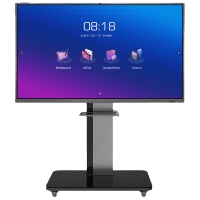
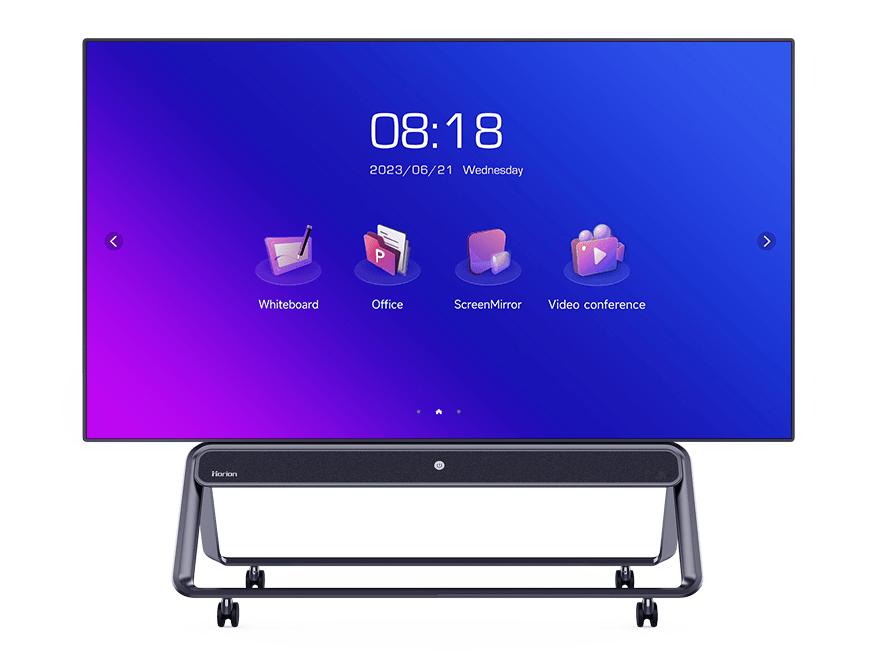
An interactive flat panel display is a large-format, touch-sensitive digital screen designed to enable direct interaction with content. Unlike conventional displays, it allows users to write, draw, annotate, manipulate objects, and collaborate simultaneously. Commonly deployed as a classroom interactive board or conference room screen, it functions as an all-in-one interactive flat panel replacing projectors, monitors, and whiteboards.
The primary purpose of an interactive flat panel display is to enhance engagement, collaboration, and efficiency by turning static presentations into interactive experiences.
Key Components of an Interactive Flat Panel
Touch Display Technology
Touch performance defines usability. Infrared (IR) touch technology, holding a 45.9% market share, dominates due to its durability, scalability, and cost efficiency—making it ideal for K-12 interactive screens and higher education. Meanwhile, capacitive touch interactive monitors are gaining popularity in offices, growing at a 9.3% CAGR, thanks to their precision and smartphone-like responsiveness.
Integrated Software and Connectivity
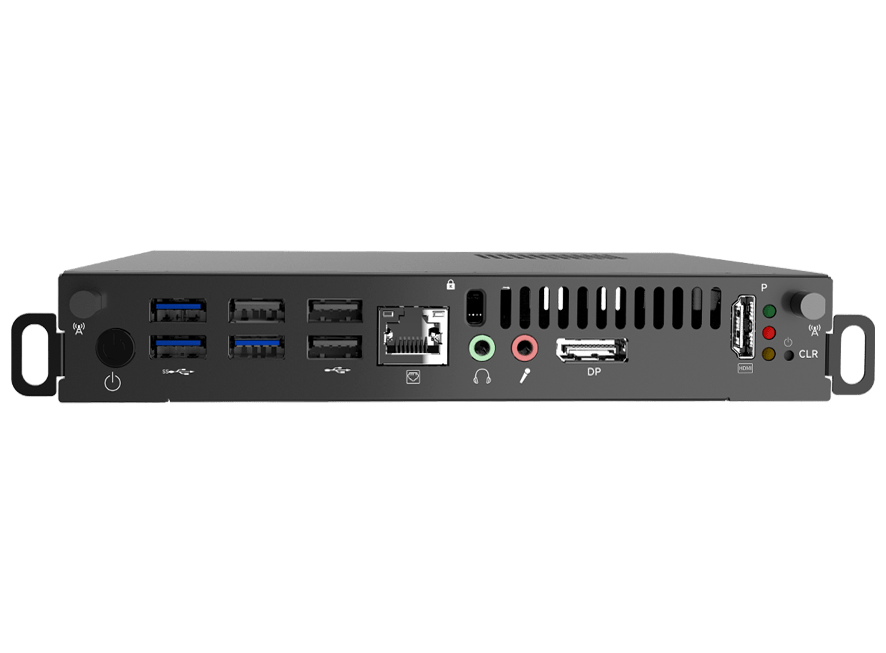
Modern interactive flat panel displays include built-in whiteboarding software, OPS PC slots, dual OS support, HDMI and USB-C connectivity, wireless screen sharing, and cloud-based collaboration tools. These features position them as complete corporate display solutions and interactive teaching screens rather than simple displays.
Key Features of Interactive Flat Panel Displays
Multi-Touch and Gesture Recognition
Most commercial-grade interactive flat panel displays support 20-point multi-touch interaction, allowing multiple users to engage simultaneously. This capability is critical for team collaboration panels, executive boardroom screens, and interactive flat panel displays for classroom teaching.
Large-format panels—65-inch, 75-inch, and 86-inch smart boards—account for over 90% of total market share, reflecting the demand for immersive collaborative environments.
High-Resolution Visual Experience
Visual clarity enhances comprehension and reduces fatigue. 4K UHD interactive flat panels now represent 58% of new installations, offering superior brightness, wide viewing angles, anti-glare coatings, and high contrast ratios. 8K resolution displays are emerging in design-focused and premium corporate applications.
Built-In Collaboration and Annotation Tools
Advanced annotation displays include stylus pen support, handwriting recognition, cloud synchronization, and real-time video conferencing integration. These features transform the panel into a fully integrated digital collaboration board.
Benefits of Interactive Flat Panel Displays
Enhanced Student Engagement in Smart Classrooms
Education accounts for 40–50% of global interactive flat panel display revenue, making it the largest application segment. In developed economies, 72% of classrooms used interactive flat panels in 2023, validating their role as the preferred digital teaching board and interactive whiteboard for teachers.
Interactive flat panels support multimedia lessons, interactive quizzes, and real-time feedback, significantly improving student participation and knowledge retention.
Improved Workplace Collaboration
The corporate sector represents 20–25% of the market and is growing rapidly, with 53% of corporate boardrooms globally deploying interactive flat panel displays. These displays function as conference room interactive displays, supporting hybrid meetings, screen mirroring, and collaborative brainstorming.
Cost Efficiency and Sustainability
Although initial prices range from USD 1,500 to over USD 12,000, declining component costs and reduced maintenance improve total cost of ownership. New models consume less than 1W in standby power, aligning with sustainability and energy-efficiency goals.
Interactive Flat Panel Displays in Education
Smart Classrooms and Digital Learning Environments
Government-backed digital education initiatives have accelerated adoption, particularly in Asia-Pacific. Medium-sized displays (55–75 inches) hold 54.2% market share, making them ideal classroom touchscreen monitors, while large displays above 75 inches grow at up to 12.4% CAGR for auditoriums and lecture halls.
Hybrid and Remote Learning Enablement
More than 60% of IoT-enabled classrooms rely on hybrid learning interactive displays to support remote participation, digital textbooks, and cloud-based collaboration.
Role of Interactive Flat Panel Displays in Smart Work
Business Meetings and Presentations
In modern offices, interactive flat panel displays serve as touchscreen presentation screens, enabling wireless casting, live annotation, and seamless collaboration. Edge computing, now present in 20% of new models, enhances performance and security.
Corporate Training and Skill Development
Organizations deploy interactive display panels for corporate training, onboarding, and workshops, leveraging OPS modules, dual OS support, and integrated collaboration software.
Regional Market Insights
North America
North America leads with 40.8% market share, with the US contributing 25–30% of global shipments. The region emphasizes premium conference room screens and advanced classroom technology.
Asia-Pacific
Asia-Pacific is the fastest-growing region, recording 8.6–10.2% CAGR. China alone accounted for 38% of global interactive flat panel shipments in 2023, driven by large-scale smart classroom initiatives.
Europe, Middle East & Emerging Markets
Europe focuses on sustainability and energy efficiency, while the Middle East & Africa shows the highest growth at 9.7% CAGR, supported by smart learning and corporate modernization. Latin America remains an emerging opportunity.
Technology Segmentation and Trends
LCD-based interactive flat panel displays dominate with 61.8% revenue share, while LED and direct-view LED panels grow at 9.5% CAGR. Larger display sizes, cloud connectivity, and AI-driven features continue to shape product development.
Pricing and Economic Landscape
Average pricing:
- Entry-level budget interactive displays: USD 1,500–3,000
- Mid-range 75-inch interactive flat panels: USD 3,000–6,000
- Premium 86-inch PCAP displays: USD 6,000–12,000+
Falling prices and declining TCO continue to expand adoption across institutions.
Future Outlook of Interactive Flat Panel Displays
Between 2025 and 2033, the market is projected to reach USD 10.18–15.48 billion, growing at 7.4–12.3% CAGR. AI-powered collaboration, cloud-native management, antimicrobial coatings, and sustainable materials will define the next generation of displays.
Conclusion
The interactive flat panel display has evolved into an essential platform for smart learning and modern work. With education dominating market share and corporate adoption accelerating, interactive flat panels—whether used as digital collaboration boards, smart classroom displays, or conference room interactive screens—are shaping the future of connected, collaborative environments. As technology advances and costs decline, their role will only become more central to digital transformation strategies worldwide.